Cargo Monitoring
Transform shipment data into actionable insights that support better decisions across the supply chain
What is cargo monitoring?
Cargo monitoring protects temperature-sensitive cargo by combining globally connected devices with advanced software and analytics, delivering reliable alerts and end-to-end visibility worldwide. This approach helps teams reduce delivery rejections, improve on-time and in-full performance and optimize operations with greater confidence.
- Greater visibility into shipment location and environmental conditions for pharmaceuticals, perishables, retail goods or other sensitive cargo
- Earlier awareness of potential issues and opportunities to act so teams can make faster, better-informed decisions
- More objective evaluation of carrier, route and lane performance
- Increased confidence in understanding and documenting what happened in transit
- Stronger alignment with customer and compliance requirements as well as better consistency across monitoring processes and data
- Reduced exposure to avoidable product loss and waste
- Enhanced ability to protect product quality, freshness and safety
How does real-time cargo monitoring work?
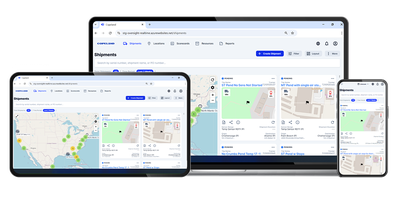
Real-time cargo monitoring uses monitoring devices placed within a shipment to capture temperature, humidity, location, shock, security data and more throughout transit. GO Real-Time trackers transmit this information over broad global cellular networks as events occur, providing near continuous visibility and immediate access to shipment conditions in the cloud-based Oversight360 platform.
Data is centralized, transforming sensor readings into actionable insights, alerts, analytics and reports. The combination of real-time visibility and detailed historical records helps companies protect cold chain and sensitive cargo including pharmaceutical, high-value and retail shipments while reducing losses, improving compliance and supporting on-time, in-full delivery performance.
Copeland offers a comprehensive portfolio of cargo monitoring solutions for cold chain applications, each combining powerful software with real-time trackers and data loggers to meet a wide range of operational needs. Designed with a modular and scalable approach, these solutions enable organizations to start with the monitoring capabilities needed today and seamlessly expand as supply chain visibility, compliance and performance requirements evolve.


Cargo monitoring case studies
Real-world success stories highlight the value of Copeland’s cargo monitoring solutions. These case studies showcase how businesses across industries have leveraged our innovative technologies to enhance supply chain visibility, reduce waste and meet critical sustainability goals.

Challenge: A $60,000 truckload of fresh berries was crossing the country ahead of Mother's Day on a tight delivery window. Mid-route, temperatures climbed above the safe 31°F to 36°F range. With legacy recorders, ATS had only ever discovered losses after delivery, when it was too late to act.
Solution: Copeland's GO Real-Time tracker alerted ATS while the berries were still in transit. The team followed its standard procedure, called the driver and diverted the truck to a 24-hour reefer technician. A technician repaired the unit, the berries arrived on time and the customer never knew there was a problem.

Challenge: Perishable goods leave no margin for error. This distribution center struggled to uphold food safety and quality standards as gaps in temperature monitoring and compliance visibility went unchecked. Every blind spot put product integrity, regulatory standing and customer trust at risk.
Solution: Copeland deployed its advanced food safety monitoring technology, giving the distribution center real-time temperature data and automated alerts. Teams now act before issues escalate. They ensure compliance, protect product quality and reduce waste throughout the cold chain.

Challenge: Shrimp is one of the most temperature-sensitive cargos in the global cold chain. For this exporter, limited visibility during long ocean voyages from India to global markets meant temperature deviations often went undetected until arrival. Every gap put product quality, customer trust and profit margins at risk.
Solution: Copeland deployed real-time cargo trackers connected to its Oversight360 portal, giving the exporter continuous temperature and location data across every shipment. Actionable insights enabled fast intervention, so shrimp arrived fresh and the business protected its margins and reputation.

Elevate performance and sustainability
For over 20 years, Copeland has helped shape the future of cold chain visibility through continuous innovation, proven reliability and deep expertise across global supply chains. Copeland continues investing in advanced monitoring technologies, connected software and intuitive user experiences to help customers uncover visibility gaps, analyze performance and drive continuous improvement.
By converting shipment data into operational intelligence, Copeland supports smarter decisions about carriers, lanes, suppliers and overall supply chain performance. Copeland remains committed to the future by delivering sustainable, high-performance solutions that strengthen cold chain resilience, support operational excellence and help customers succeed in an increasingly complex and connected world.
Why choose Copeland for cargo monitoring?
Copeland is redefining cargo monitoring through innovative solutions that eliminate visibility gaps by transforming shipment data into actionable insights, analytics and performance reporting. Backed by decades of cold chain expertise and a global footprint supporting more than five million temperature-sensitive shipments annually,1 Copeland delivers the intelligence, reliability and scalability needed to navigate increasingly complex supply chains.
Copeland helps customers identify risks earlier, reduce delivery rejections, improve on-time and in-full performance, protect product integrity and optimize supply chain operations around the globe.
Key differentiators:
- Precision cold chain management: Ensures optimal conditions for temperature-sensitive, regulated and high-value shipments, reducing spoilage and waste
- Proactive risk mitigation: Utilize analytics and real-time alerts to prevent theft, damage and costly delays
- Sustainable logistics: Support energy efficiency, reduce carbon emissions and enable the use of climate-friendly solutions across the cold chain
- Regulatory compliance readiness: Delivers verifiable shipment data and reporting that support compliance, traceability and quality management programs, helping organizations meet evolving industry requirements, customer expectations and regulations
- End-to-end visibility: Provides comprehensive insights from origin to destination, bridging data gaps in complex supply chains
- Trusted proof and documentation: Generates secure records, trip reports and historical data that help organizations understand what happened during transit, support claims investigations and demonstrate shipment integrity
- Robust integration: Solutions designed for seamless integration with existing ERP, WMS, TMS and other logistics systems, enhancing overall operational intelligence.
Copeland partners with customers each step of the way through selection, system design and long-term performance with comprehensive lifecycle services.


FAQs about cargo monitoring
What is real-time cargo monitoring and how does it differ from data loggers or refrigeration unit monitoring?
Traditional tracking methods, such as refrigeration unit downloads and data loggers, provide valuable records that help verify shipment conditions after or at specific points during transit. Real-time cargo monitoring delivers continuous visibility into shipment temperature, humidity, location and security conditions while cargo is in transit. Copeland's GO Real-Time trackers transmit cargo-level sensor data to the Oversight360 platform, enabling real-time alerts and proactive intervention when conditions fall outside predefined limits. Built-in analytics and reporting also help organizations identify trends, measure performance, reduce product loss and continuously improve cold chain operations.
How do monitoring sensors protect sensitive cargo in transit?
Sensors capture temperature, humidity, location and other cargo-level data throughout transit, providing a more complete view of shipment conditions than refrigeration unit readings alone. Copeland GO loggers record this information throughout the journey for post-trip analysis and compliance documentation, while GO Real-Time Trackers continuously transmit data to the Oversight360 platform during transit. This visibility helps identify operational issues such as extended door openings, improper loading practices, refrigeration system performance problems or route-related temperature excursions. When conditions move outside predefined limits, Oversight360 generates real-time alerts, enabling logistics teams to investigate issues, coordinate with carriers and take corrective actions before product quality, compliance or delivery performance is impacted.
What role does predictive analytics play in cargo monitoring?
Predictive analytics helps organizations move beyond monitoring individual shipments to identifying patterns, trends and recurring risks across their supply chain. By analyzing real-time and historical shipment data, organizations can evaluate carrier, route and lane performance, identify the root cause of temperature excursions and delays and uncover opportunities to improve operational efficiency. Through Oversight360's analytics, reporting and performance scorecards, Copeland helps customers transform shipment data into actionable insights that support better business decisions, improve operational performance and drive continuous improvement across the supply chain.
Can cargo monitoring solutions help with regulatory compliance?
Yes. Copeland's cargo monitoring solutions support regulatory compliance, traceability and quality assurance initiatives by automatically generating records of environmental conditions throughout every shipment. The software platform produces detailed trip reports documenting sensor readings, locations and transit history that can be shared across the supply chain and exported as needed. These records help organizations demonstrate shipment integrity, support audit and reporting requirements, meet customer quality standards and address evolving regulatory requirements across temperature-sensitive industries and global markets.
How does Copeland ensure the security of cargo during transit?
Copeland's GO Real-Time Trackers provide continuous shipment oversight through real-time location monitoring, automated alerts and exception management. Through the Oversight360 platform, teams can monitor active shipments on a live map, receive notifications for events such as unexpected light exposure, extended dwell times, route deviations or tracker activation and quickly identify shipments that require attention. These alerts help stakeholders investigate potential issues, coordinate with carriers and take corrective action before security incidents, delays, product loss or quality concerns escalate.
What types of cargo can be monitored using Copeland cargo monitoring solutions?
Copeland's cargo monitoring solutions support a wide range of temperature-sensitive and high-value shipments including food, beverage, floral, pharmaceutical, retail and specialty cargo applications. Whether products move by truck, rail, air or ocean freight, Copeland helps organizations monitor shipment conditions, protect product integrity and maintain visibility throughout global supply chains.
How can cargo monitoring reduce operational costs and improve efficiency?
Copeland's cargo monitoring solutions reduce costs by minimizing product loss, preventing load rejections, mitigating delays and improving logistics decision-making across global transportation networks. Real-time visibility into shipment conditions allows teams to quickly identify exceptions, prioritize corrective actions and resolve issues before they disrupt deliveries or impact product quality. Automated alerts, reporting and workflow integration reduce manual data collection, streamline communication among carriers, shippers and receivers and eliminate time spent tracking down shipment information. By providing actionable insights through Oversight360, organizations can make faster decisions, improve operational efficiency, reduce administrative burden and optimize supply chain performance.
What is a data logger used for in cargo monitoring?
A data logger records temperature, humidity and other environmental conditions throughout a shipment's journey for post-trip analysis and compliance documentation. Unlike real-time trackers, data loggers capture information passively, making them well suited for shipment verification and regulatory compliance once a shipment reaches its destination.
What industries rely most on real-time cargo tracking?
Industries handling temperature-sensitive or high-value goods, including pharmaceuticals, food and beverage, floral and specialty retail, rely most on real-time cargo tracking. These sectors depend on continuous visibility to protect product integrity, meet compliance requirements and prevent costly losses during transit.

Optimize your cold chain and cargo security with Copeland
Finding monitoring gaps before they become problems starts with a cold chain assessment. Request an assessment and start optimizing a monitoring strategy.
1This page contains a series of company impact statements that use qualitative language and metrics to describe our industry presence and sustainability impact. Learn more about how we determine our impact statements.