Copeland Compressor Electronics for Residential HVAC
Advanced control solutions that optimize compressor performance, reduce energy consumption and enhance comfort in residential heat pump and cooling systems through intelligent power management and precise operation.
What are compressor electronics and why do they matter?
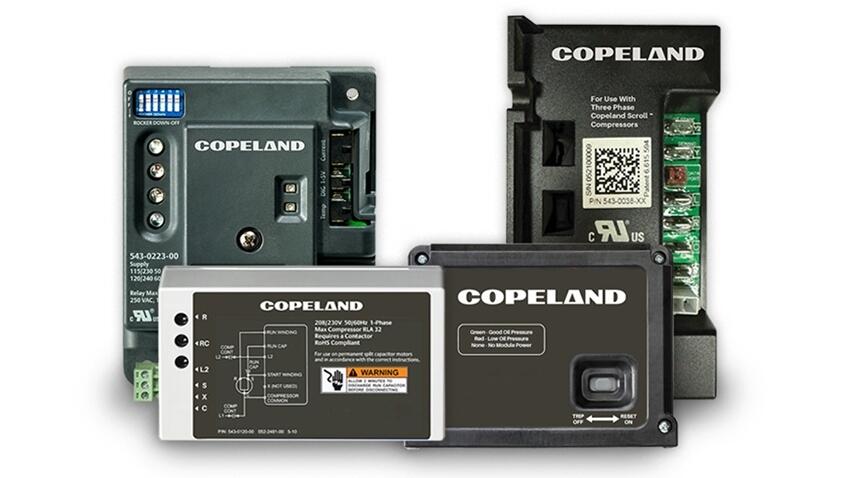
Copeland compressor electronics are the control and power management systems that regulate how residential AC compressors operate. They enable variable-speed performance, protect against electrical and mechanical faults and ensure precise temperature control. Without intelligent electronics, a compact scroll compressor cannot achieve the efficiency levels that modern regulations and consumers demand
Copeland compressor electronics continuously monitor system conditions, including temperature, pressure and load requirements, then adjust compressor speed accordingly. This eliminates the energy waste of traditional on-off cycling and keeps the residential AC compressor running at peak efficiency across all load conditions.
How do Copeland compressor electronics improve energy efficiency?
Copeland compressor electronics manage power delivery and operational parameters to ensure compressors run at optimal speeds for current cooling demands. The control systems continuously monitor system conditions including temperature, pressure and load requirements, then adjust compressor speed and operation accordingly. This variable-speed capability eliminates the inefficiencies of traditional on-off cycling, maintaining precise temperature control while minimizing energy use. Integrated protection algorithms monitor critical parameters to prevent damage from electrical faults, thermal stress or abnormal operating conditions. The result is a cooling system that delivers consistent comfort, operates quietly and achieves superior energy efficiency across all load conditions.
Intelligent control for optimized cooling and heating performance
Copeland compressor electronics manage power delivery and operational parameters to ensure compressors run at optimal speeds for current cooling demands. Integrated protection algorithms monitor critical parameters to prevent damage from electrical faults, thermal stress or abnormal operating conditions.
The result is a cooling system that delivers consistent comfort, operates quietly and achieves superior energy efficiency across all load conditions.
Protection features include monitoring for:
- Overcurrent, overvoltage and undervoltage
- Phase loss and thermal overload
- Abnormal pressure conditions and communication faults
- Corrective actions including speed reduction, temporary shutdown or fault indication
Our compressor electronics portfolio spans variable frequency drives, control boards and integrated power modules designed for diverse residential heat pump and air conditioning applications. From entry-level fixed-speed controls to advanced variable-speed systems, Copeland electronics deliver the precise performance characteristics manufacturers need to differentiate their products and meet efficiency targets across global markets.


How compressor electronics support residential air conditioning efficiency regulations
Global energy efficiency regulations continue to raise performance requirements for residential air conditioning and heat pump systems. Copeland compressor electronics enable manufacturers to meet and exceed these standards through intelligent variable-speed control that reduces energy consumption while maintaining superior comfort.
These solutions support the transition to higher-efficiency refrigerants and provide the flexibility needed to address diverse regional requirements and evolving market demands. Control algorithms and protection parameters are specifically calibrated for modern refrigerants, ensuring optimal performance, proper oil management and reliable operation across the full range of residential heating and cooling conditions.

Ideal applications for compressor electronics
Copeland compressor electronics serve diverse residential heating and cooling applications, from single-family homes to multi-dwelling units. Control solutions adapt to varying system architectures, capacity requirements and installation environments, providing manufacturers with the flexibility to optimize performance for specific market segments while maintaining design efficiency across product lines.


Why choose Copeland compressor electronics?
Copeland brings decades of compressor and control system expertise to residential air conditioning and heat pump applications. Electronics are engineered alongside Copeland compressors, ensuring optimized integration, proven reliability and comprehensive support across millions of global installations. With a presence spanning manufacturing, engineering and technical service, we provide the scale and responsiveness that equipment manufacturers need to succeed in competitive markets.
- Proven integration with Copeland compressor platforms for optimized system performance
- Global manufacturing and support infrastructure ensuring supply continuity and local responsiveness
- Continuous innovation in power electronics and control algorithms advancing efficiency and capability
- Comprehensive technical resources and application support accelerating product development cycles
Copeland provides comprehensive support throughout the equipment lifecycle, from initial system design through long-term operation and maintenance. This support ensures optimal performance, maximizes uptime and extends equipment life.


Tools for specification, diagnostics and product selection
Copeland provides robust digital tools and mobile resources that accelerate design decisions, simplify product selection and support field service activities.
FAQs about compressor electronics
What are compressor electronics and why are they important in residential air conditioning?
Copeland compressor electronics (formerly CoreSense) are the control and power management systems that regulate compressor operation in air conditioning systems. They enable variable-speed operation, optimize energy efficiency, provide protection against electrical and mechanical faults and ensure precise temperature control. Modern electronics are essential for meeting efficiency standards and delivering the comfort performance consumers expect.
How do variable-speed compressor controls improve energy efficiency?
Variable-speed controls allow compressors to operate at the exact speed needed to match current building demand, rather than cycling on and off at full capacity. This eliminates the energy waste associated with frequent starts and stops, maintains more consistent temperatures with less overshoot and keeps the system running in its most efficient operating range. The result is typically 20-40% energy savings compared to fixed-speed systems.
Are Copeland compressor electronics compatible with different compressor types?
Copeland electronics are designed for optimal integration with Copeland scroll compressors used in residential air conditioning applications. Each electronics solution is engineered to match the specific operational characteristics, protection requirements and performance capabilities of its intended compressor platform, ensuring reliable operation and maximum efficiency.
What protection features are included in Copeland compressor electronics?
Copeland electronics include comprehensive protection algorithms that monitor for overcurrent, overvoltage, undervoltage, phase loss, thermal overload, abnormal pressure conditions and communication faults. These systems continuously assess operating parameters and take corrective action to prevent compressor damage, including speed reduction, temporary shutdown or fault indication for service attention.
How do compressor electronics support higher-efficiency refrigerants?
Modern refrigerants often have different thermodynamic properties and operating characteristics compared to legacy refrigerants. Copeland electronics incorporate control algorithms and protection parameters specifically calibrated for these refrigerants, ensuring optimal performance, proper oil management and reliable operation across the full range of operating conditions encountered in residential heating and cooling applications.
Can compressor electronics integrate with smart home systems?
Many Copeland electronics solutions include communication interfaces that enable integration with building automation systems, smart thermostats and connected home platforms. These interfaces support standard protocols for remote monitoring, diagnostic data access and coordinated system control, enabling the connected functionality consumers increasingly expect.
What technical support does Copeland provide for electronics integration?
Copeland offers comprehensive application engineering support including system design consultation, electronics selection guidance, integration testing support and troubleshooting assistance. Our technical teams work directly with equipment manufacturers to optimize electronics integration, validate system performance and resolve any technical challenges that arise during development or production.
How do compressor electronics enable quieter air conditioning operation?
Variable-speed electronics allow compressors to run at lower speeds during partial load conditions, which significantly reduces operational noise compared to fixed-speed systems running at full capacity. Smooth speed transitions eliminate the noise associated with frequent on-off cycling, and advanced control algorithms minimize vibration and acoustic disturbances throughout the operating range.
What diagnostic capabilities do Copeland compressor electronics provide?
Our electronics include onboard diagnostic systems that monitor operational parameters, detect fault conditions and store fault history for troubleshooting. Many solutions provide diagnostic data access through communication interfaces, enabling remote monitoring, predictive maintenance and rapid fault identification that reduces service time and improves system uptime.
How do compressor electronics help meet regional energy efficiency regulations?
Copeland electronics enable the variable-speed operation and precise control required to achieve the high seasonal efficiency ratings mandated by regulations in markets worldwide. Solutions are designed with the flexibility to support different efficiency tiers and regional standards, allowing manufacturers to address diverse regulatory requirements with common platform architectures.
What is the typical lifespan of compressor electronics in residential applications?
When properly installed and operated within specified parameters, Copeland compressor electronics are designed to provide reliable operation throughout the expected service life of the system, typically 15-20 years. Longevity depends on factors including operating environment, electrical power quality, proper installation and adherence to maintenance recommendations.
How is the right compressor electronics solution selected for a specific system?
Electronics selection depends on factors including compressor type and capacity, desired efficiency level, system voltage, refrigerant type, communication requirements and regional regulatory standards. Copeland provides selection tools and application engineering support to help identify the optimal electronics solution for a specific system architecture and performance objectives.