Condensing Units
Copeland offers a comprehensive portfolio of condensing units designed to deliver reliable, efficient and flexible refrigeration solutions for various cold chain applications, supporting global sustainability with advanced low-global warming potential (GWP) refrigerants compatibility.
Advanced energy-efficient refrigeration for essential cold chain operations
As global climate challenges intensify and energy standards become increasingly stringent, the cold chain industry is confronted with an imperative to adopt more advanced operating practices. Cold chain operators require technologies engineered to balance cooling performance, regulatory compliance and operational efficiency, enabling the protection of vital resources — from food to pharmaceuticals — on a global scale.
Copeland condensing units offer a flexible, integrated solution for refrigeration systems, combining our proven compressor technology with an optimized system design. Our broad portfolio covers both indoor and outdoor applications, with each unit engineered for energy efficiency, reliable operation and compatibility with evolving refrigerants. This makes them a trusted choice for critical cooling needs around the world.
- Comprehensive portfolio of outdoor, indoor and specialized condensing units and packaged systems for cold chain applications
- Energy-efficient designs reduce operating costs and support regulatory compliance
- Proven Copeland compressor technology integrated into every unit for reliable performance
- Compatible with low-GWP refrigerants including CO₂, A2Ls and R-290
- Compact, integrated designs simplify installation and reduce system complexity
- Advanced diagnostics and protection features minimize downtime and service costs
- Flexible capacity options from fractional to industrial-scale cooling requirements
- Global support network with millions of installations across food retail, cold storage and foodservice
- Variable speed and digital modulation options for precise temperature control
- Factory-assembled configurations reduce installation time and ensure consistent quality

How Copeland condensing units work
Copeland condensing units combine optimized compressor technology with efficient heat-rejection components in a factory-assembled package. The compressor circulates refrigerant by compressing low-pressure vapor into a high-pressure gas. This hot gas flows through the condenser coil where fans blow ambient air across the coil surface. This process rejects heat and condenses the refrigerant into a liquid. The liquid refrigerant then moves to the evaporator to absorb heat from the refrigerated space, completing the cycle. Variable speed fan motors and advanced controls continuously adjust the system to match cooling demands, helping maximize efficiency and maintain precise temperature control. Onboard diagnostics monitor performance and provide early warnings of potential issues, which protects the equipment and reduces service needs.
Optimal selection for every refrigeration need
Copeland offers condensing units engineered for specific application requirements and operating conditions. From compact scroll-based solutions for walk-in coolers to industrial semi-hermetic systems for heavy-duty cold storage, each platform delivers optimized performance for its intended use. Understanding the differences helps ensure proper selection for capacity, efficiency and refrigerant compatibility.

Meeting today's efficiency and market demands
Cold chain operators face increasing pressure to reduce energy consumption, transition to low-GWP refrigerants and maintain uninterrupted cooling in critical applications. Copeland condensing units address these requirements through high-efficiency compressor technology, compatibility with sustainable refrigerants and advanced protection features that prevent costly downtime. Variable speed fan motors and optimized heat transfer surfaces deliver documented energy savings while onboard diagnostics simplify maintenance and extend equipment life. This combination of efficiency, sustainability and reliability helps operators meet regulatory requirements and reduce total cost of ownership.
Explore how Copeland condensing units meet the requirements of the most demanding cold chain applications:

Copeland builds reliable cold chain for life-saving vaccines in India
Challenge: A leading vaccine manufacturer in India faced inefficiencies in their cold chain setup, including prolonged installation times, high maintenance demands and excessive noise and vibration levels. The system struggled to perform under extreme conditions, such as high ambient temperatures (up to 118°F/48°C) and condensing temperatures (up to 131°F/55°C to 140°F/60°C), raising concerns about reliability and precision for storing critical vaccines.
Solution: Copeland, in partnership with Megastar Engineering, installed semi-hermetic and scroll condensing units for two freezer rooms (15 kW each) and two chiller rooms (14 kW each) with 100% standby redundancy. The factory-assembled air-cooled units simplified installation, reduced costs and ensured reliable performance with R-404A refrigerant, even in extreme conditions.

Digital compression and remote monitoring extend product life
Challenge: Chazy Orchards in New York required four new controlled-atmosphere rooms equipped with remote access and monitoring capabilities. However, the facility's reliance on single-phase power posed challenges. Traditional units struggled to maintain precise temperatures, frequently cycling or resorting to inefficient hot gas bypass systems due to significant outdoor temperature fluctuations and varying inventory levels.
Solution: Copeland digital X-Line units were installed — three single-phase 5 HP systems per room. This solution reduced condensing unit cycles by matching loads from 20-100%. Digital compression, smart diagnostics, electronic expansion valves and remote monitoring stabilized temperatures, boosted reliability and lowered energy costs by about $7,000 annually.

Low-GWP refrigerant transition advances compliance and cost-effective operations
Challenge: Picard, a leading French frozen food retail chain with 1,200 stores, needed to transition its cold room refrigeration systems to very low-global warming potential refrigerants (GWP<150) to comply with European F-Gas regulations. The solution had to be energy-efficient, reliable during extreme summer temperatures, cost-effective and easy to deploy.
Solution: Copeland ZX series condensing units with R-454C refrigerant (GWP=146) were piloted at a store near Paris. Featuring A2L-qualified equipment, leak detection and advanced monitoring, the system maintained stable cold room temperatures (-8°F/-22°C to -13°F/2-5°C) during heatwaves, improved energy efficiency by 10%, reduced emissions and stayed within budget. Its plug-and-play design enabled quick installation, while Modbus communication simplified monitoring and maintenance. The successful pilot prompted Picard to implement the solution network-wide.

Scroll outdoor condensing units reduce energy costs for restaurant chain
Challenge: Lee’s Famous Recipe Chicken needed to reduce energy use, minimize downtime and improve efficiency in their walk-in refrigeration systems. Their legacy equipment was inefficient and unreliable.
Solution: Copeland’s X-Line series outdoor condensing unit delivered 21% energy savings with advanced scroll compressors, variable speed fans and diagnostics for easy troubleshooting. Its slim, quiet design improved installation flexibility and customer experience. The chain plans to roll out X-Line units across locations to boost efficiency and performance.
Applications for Copeland condensing units
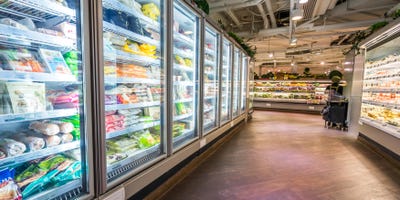
Copeland condensing units serve diverse cold chain applications with specific requirements for capacity, temperature range and operating conditions. Proper selection ensures optimal performance and efficiency for each use case.



Why choose Copeland condensing units?
Copeland condensing units combine proven compressor technology with optimized system design, delivering reliable performance backed by global support. With millions of installations worldwide and comprehensive refrigerant compatibility, these solutions meet evolving regulatory requirements while reducing energy costs and simplifying service.
- Proven Copeland compressor technology with millions of installations globally
- Energy savings up to 20% with variable-speed and digital solutions
- Compatible with CO₂, A2L and R-290 refrigerants for regulatory compliance
- Onboard diagnostics reduce service time and protect against premature failure
Lifecycle support from system design to aftermarket
Copeland provides comprehensive services throughout the equipment lifecycle, from initial system design and documentation to training and aftermarket support. Our global support network is ready to help design sustainable systems that meet today's and tomorrow’s efficiency targets.


Get answers, specify products and troubleshoot
Copeland provides robust digital tools and mobile resources that accelerate design decisions, simplify product selection and support field service activities. Access technical information, product specifications and accurate diagnoses when needed most.
FAQs about condensing units
What capacity range do Copeland condensing units cover?
Copeland offers condensing units ranging from fractional horsepower models for small walk-in coolers, display cases, and reach-in applications to industrial-scale systems for large cold storage facilities.
Which refrigerants are compatible with Copeland condensing units?
Copeland condensing units support a wide range of refrigerants including traditional options and low-GWP alternatives. Current platforms accommodate CO₂, A2L, R-290 and conventional refrigerants. Specific refrigerant compatibility varies by model and application, so product documentation should be consulted for detailed information.
How do digital scroll condensing units differ from standard scroll units?
Digital scroll technology provides variable capacity through precise on-off cycling of compression, modulating from 20-100% capacity. This enables tighter temperature control, reduced cycling and improved part-load efficiency compared to fixed-capacity units. Digital units work well for applications with varying loads or multiple evaporators on a single condensing unit.
What diagnostic features are included in Copeland condensing units?
Most Copeland condensing units include onboard compressor electronics providing fault code display, operating parameter monitoring and protection against common failure modes. These diagnostics help technicians quickly identify issues, reduce troubleshooting time and protect equipment from damage. Many units also support remote monitoring integration for facility management systems.
Can condensing units be installed indoors?
Copeland offers both indoor and outdoor condensing unit configurations. Indoor units are specifically designed for self-contained applications, such as reach-in refrigerators, display cases, prep tables, beverage dispensers and ice cream machines, as well as other types of commercial refrigeration equipment. Proper ventilation and heat rejection considerations are essential for indoor installations to maintain efficiency and prevent overheating.
What maintenance is required for condensing units?
Regular maintenance includes cleaning condenser coils, checking refrigerant charge, inspecting electrical connections and verifying proper fan operation. Frequency depends on operating environment and application but typically ranges from quarterly to annual service intervals. Onboard diagnostics help identify maintenance needs before they cause system failures.
How can the right condensing unit be selected for a specific application?
Proper selection requires determining cooling capacity requirements, operating temperature range, refrigerant type and installation constraints. Consider ambient conditions, electrical supply availability and noise restrictions. Copeland provides selection tools and application engineering support to help identify the optimal unit configuration for specific requirements.
What energy efficiency improvements do newer condensing units offer?
Modern Copeland condensing units deliver significant efficiency gains through optimized compressor technology, variable-speed fan motors, larger condenser coils and advanced controls. Documented energy savings range from 20-40% compared to older standard units depending on application and operating conditions.1 Digital and variable speed platforms provide additional savings in part-load operation.
Are replacement parts readily available for Copeland condensing units?
Copeland maintains a global parts distribution network ensuring availability of replacement components. Common wear items like fan motors, contactors and controls are stocked by distributors worldwide. The extensive installed base and long product lifecycles mean parts support continues well beyond initial equipment purchase.
How do condensing units perform in extreme ambient temperatures?
Copeland condensing units are engineered for reliable operation across a wide ambient temperature range. Specific operating limits vary by model but many units function effectively in conditions from below freezing to over 120°F/49°C. High-ambient and low-ambient kits extend operating ranges for extreme conditions. Consult technical specifications for exact operating limits.
Can multiple evaporators connect to a single condensing unit?
Digital scroll condensing units are particularly well-suited for multiple evaporator applications due to their capacity modulation capability. Proper system design requires matching total evaporator load to condensing unit capacity and ensuring adequate suction line sizing. Consult application guidelines for specific requirements when designing multi-evaporator systems.
Select a Copeland condensing unit
Copeland offers condensing units from fractional horsepower for small walk-in coolers, display cases, reach-in, prep-tables and other commercial refrigeration applications, up to industrial-scale systems for large cold storage facilities. Selecting the right unit requires a clear understanding of the application’s specific requirements, ambient conditions and performance objectives. Copeland provides dedicated selection tools and expert support to help engineers and original equipment manufacturers (OEMs) identify the optimal condensing unit for a wide range of refrigeration needs and efficiency targets, ensuring robust integration and system performance.
1This page contains a series of company impact statements that use qualitative language and metrics to describe our industry presence and sustainability impact. Learn more about how we determine our impact statements.